

Building on the Room Project, I designed a 4-family residence for a West Berkeley parking lot redevelopment. Using a part-to-whole approach, the project explores how spatial and environmental strategies can foster social relationships, diverse forms of kinship, and everyday living dynamics among the residents.Room To House
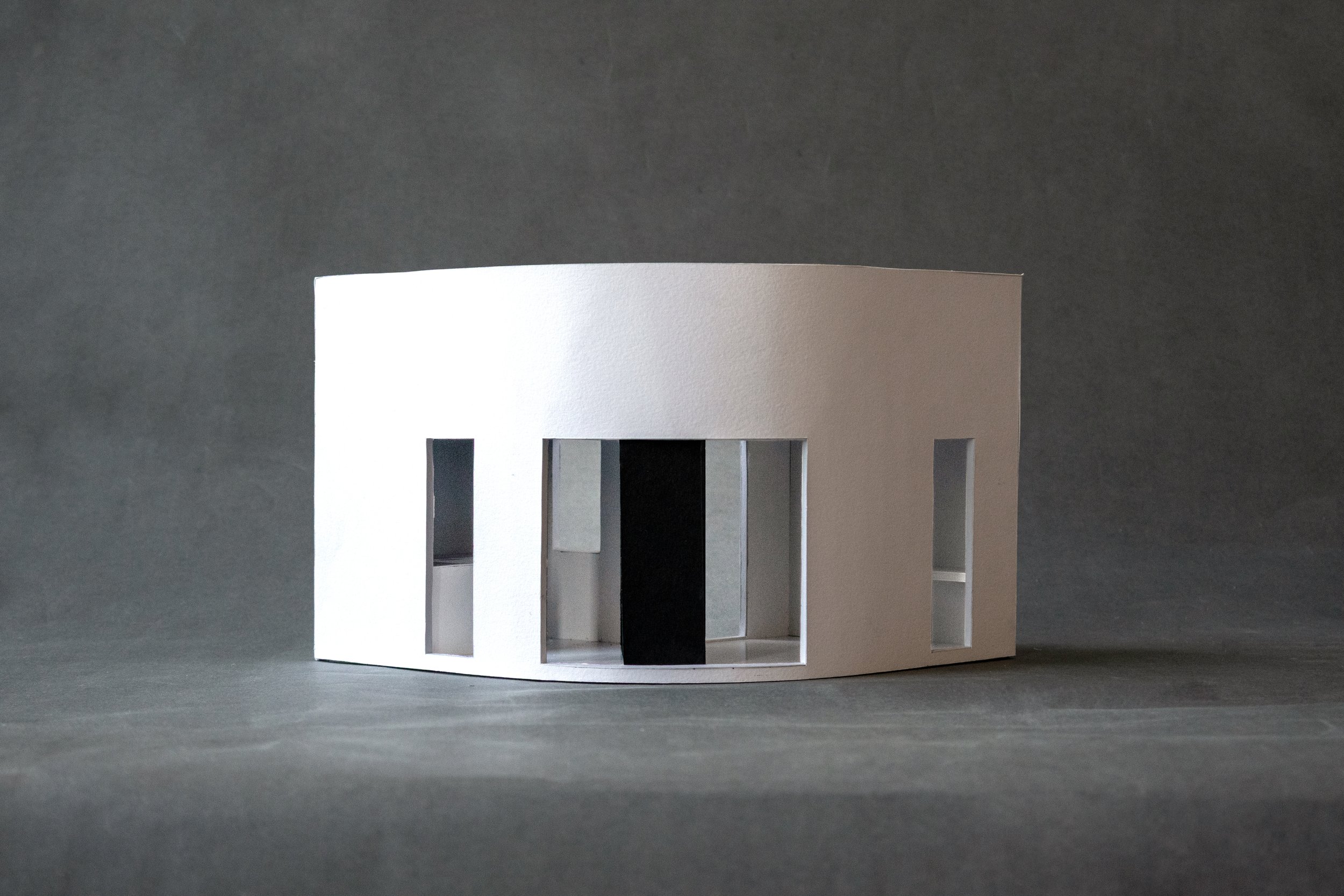
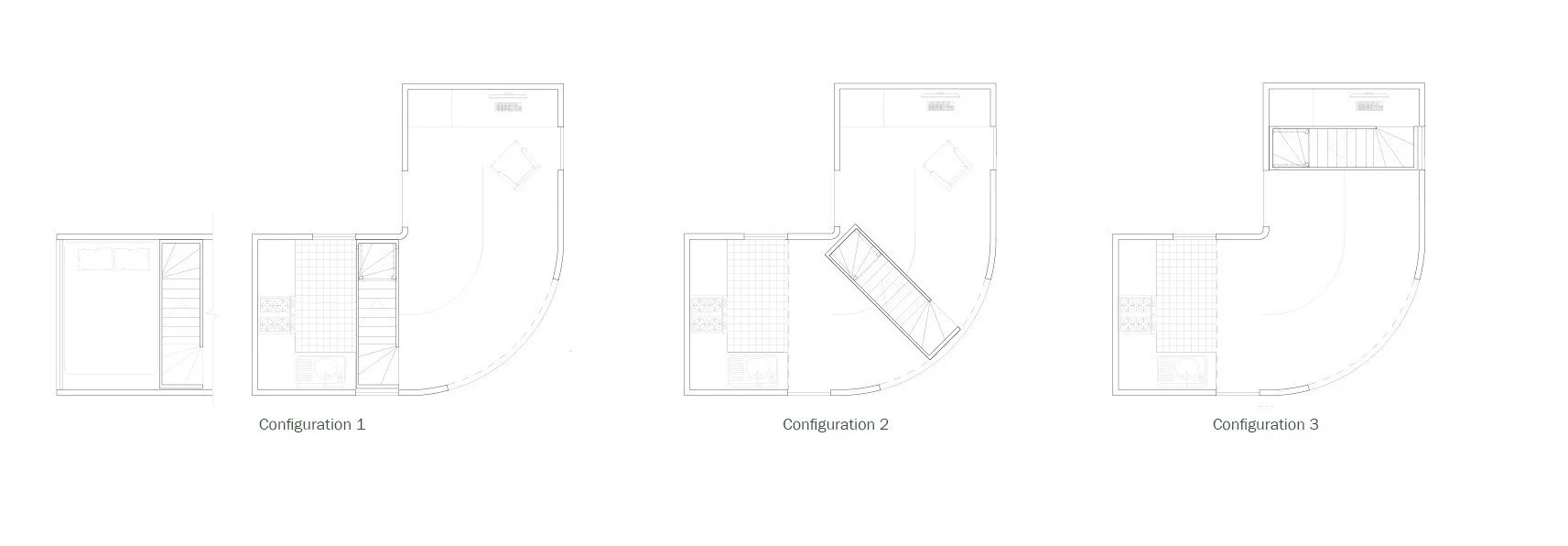
[ROOM] Moveable Object in Space
The movable utility space can’t be relocated freely; instead, it is mechanically operated and constrained by the L-shaped room. The movable object houses stairs / a ladder used to get up to the mezzanine, where the bed is located. The goal is to create an adaptable space where utility areas can be modified to serve different functions.
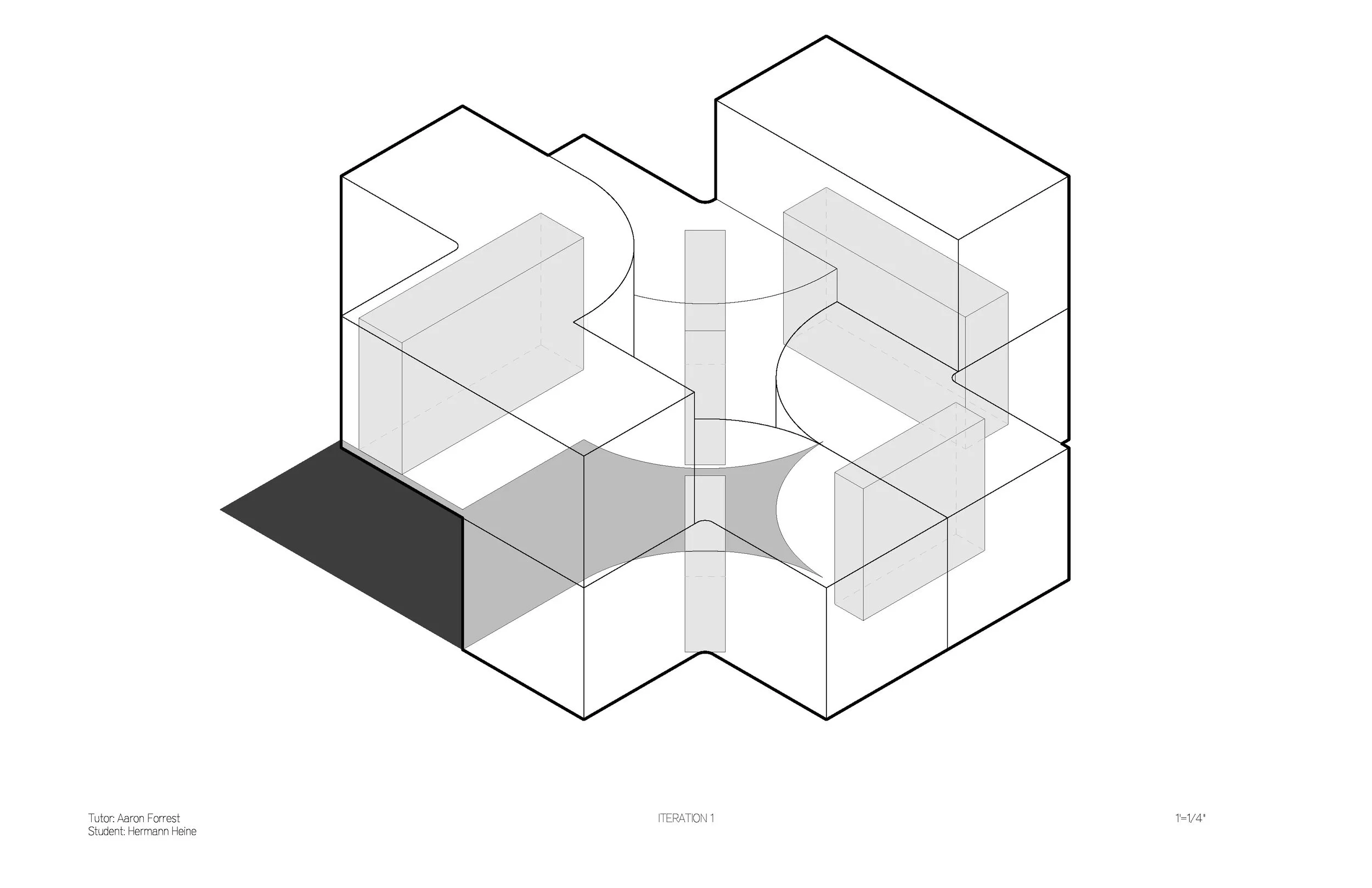
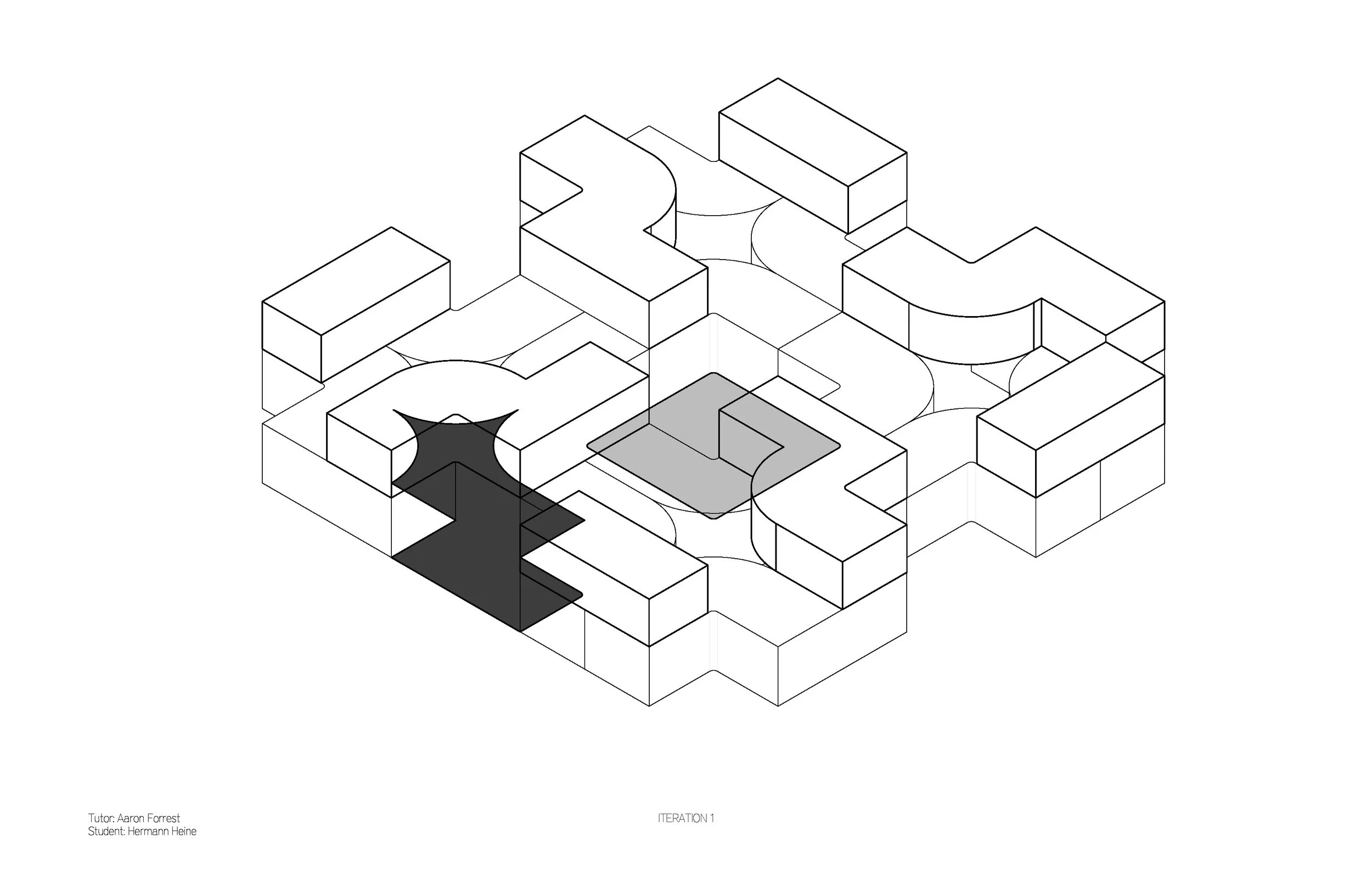
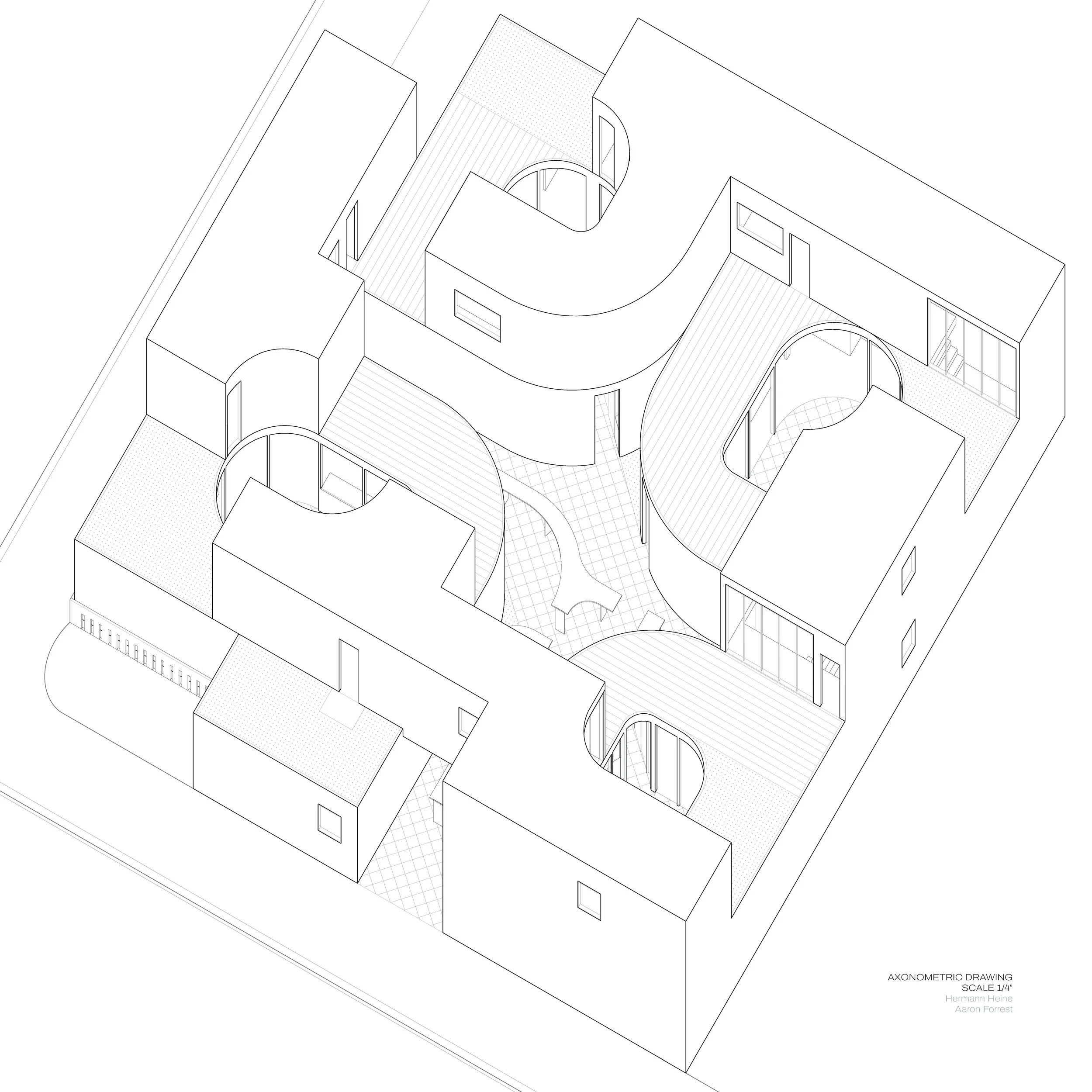
[HOUSE] Object as Threshold
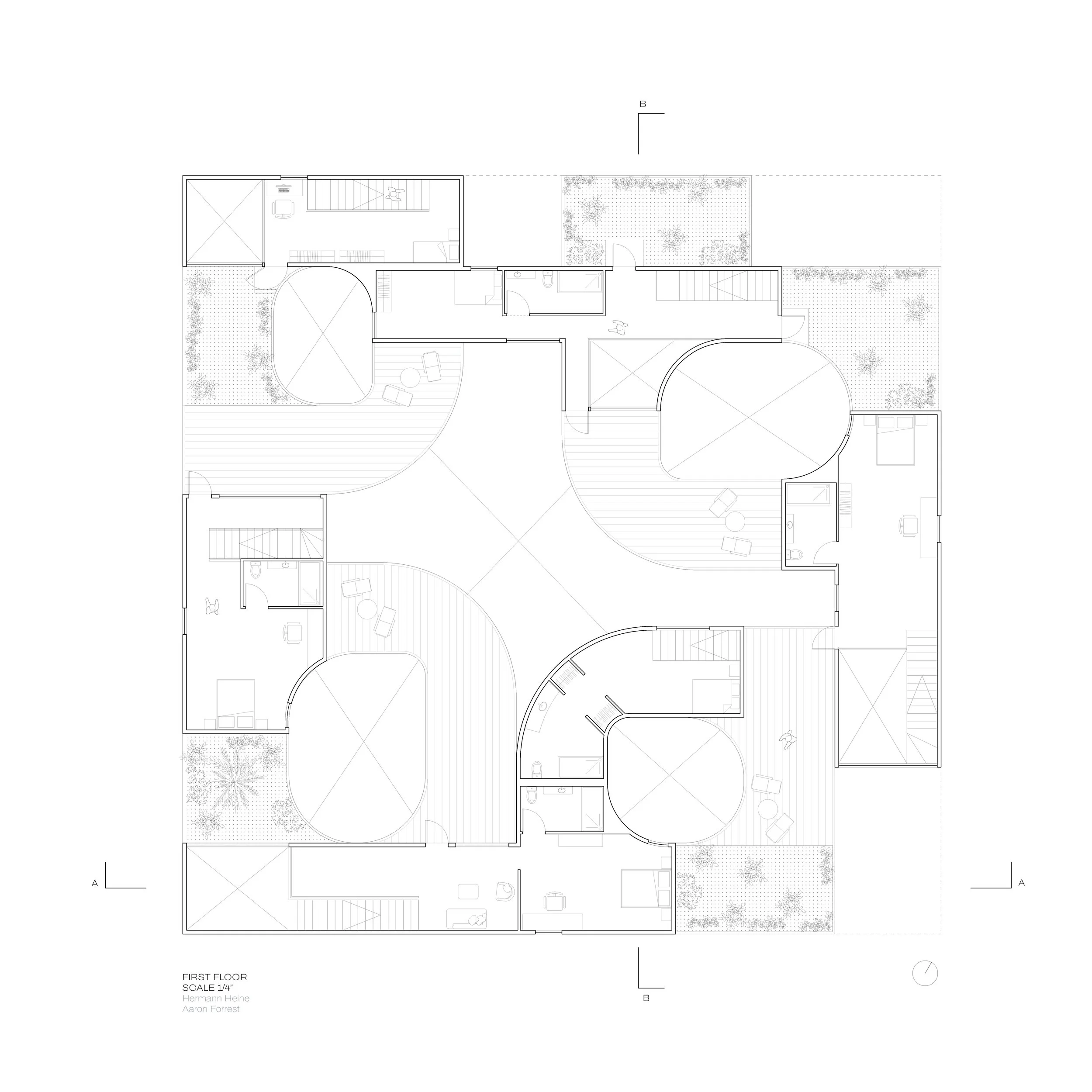
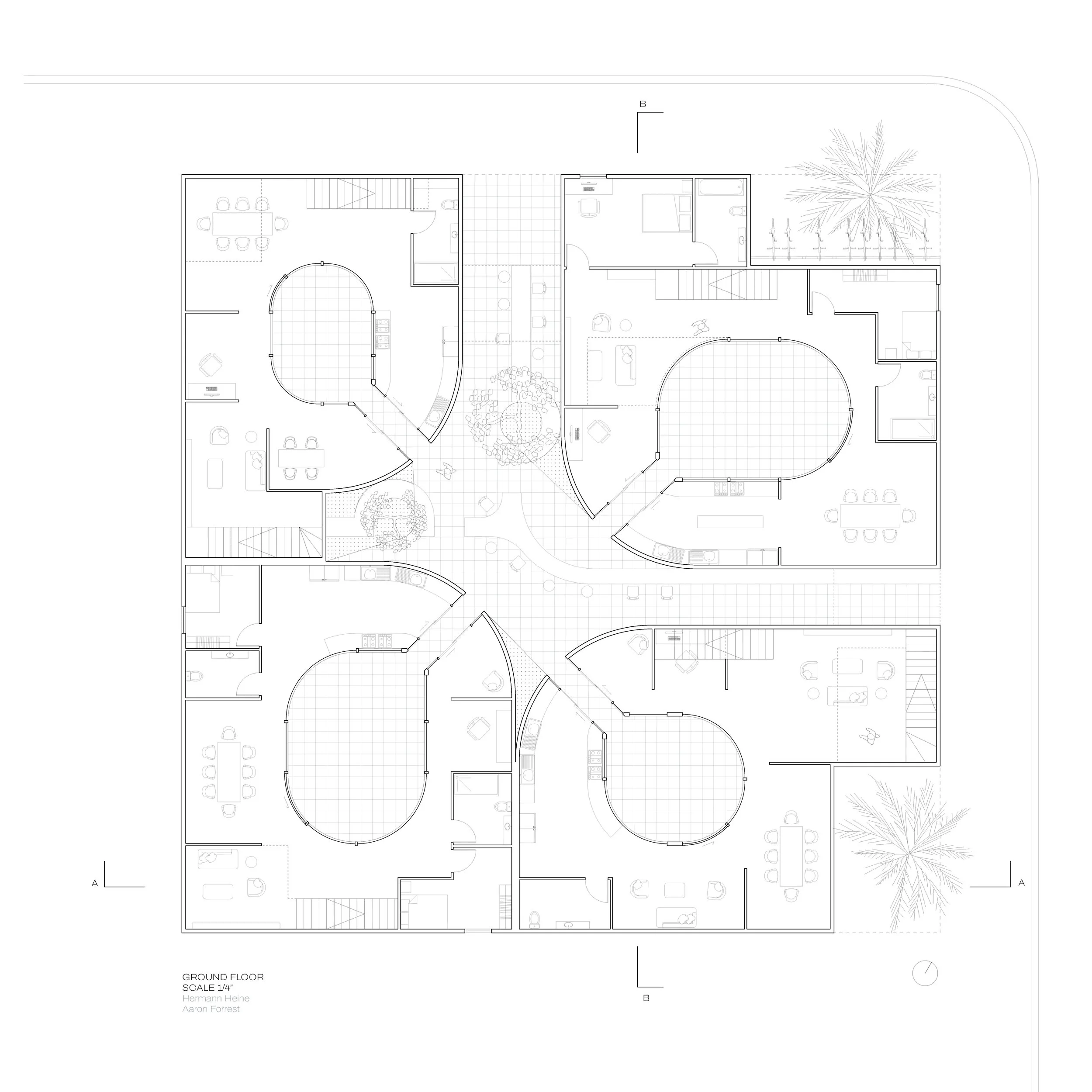
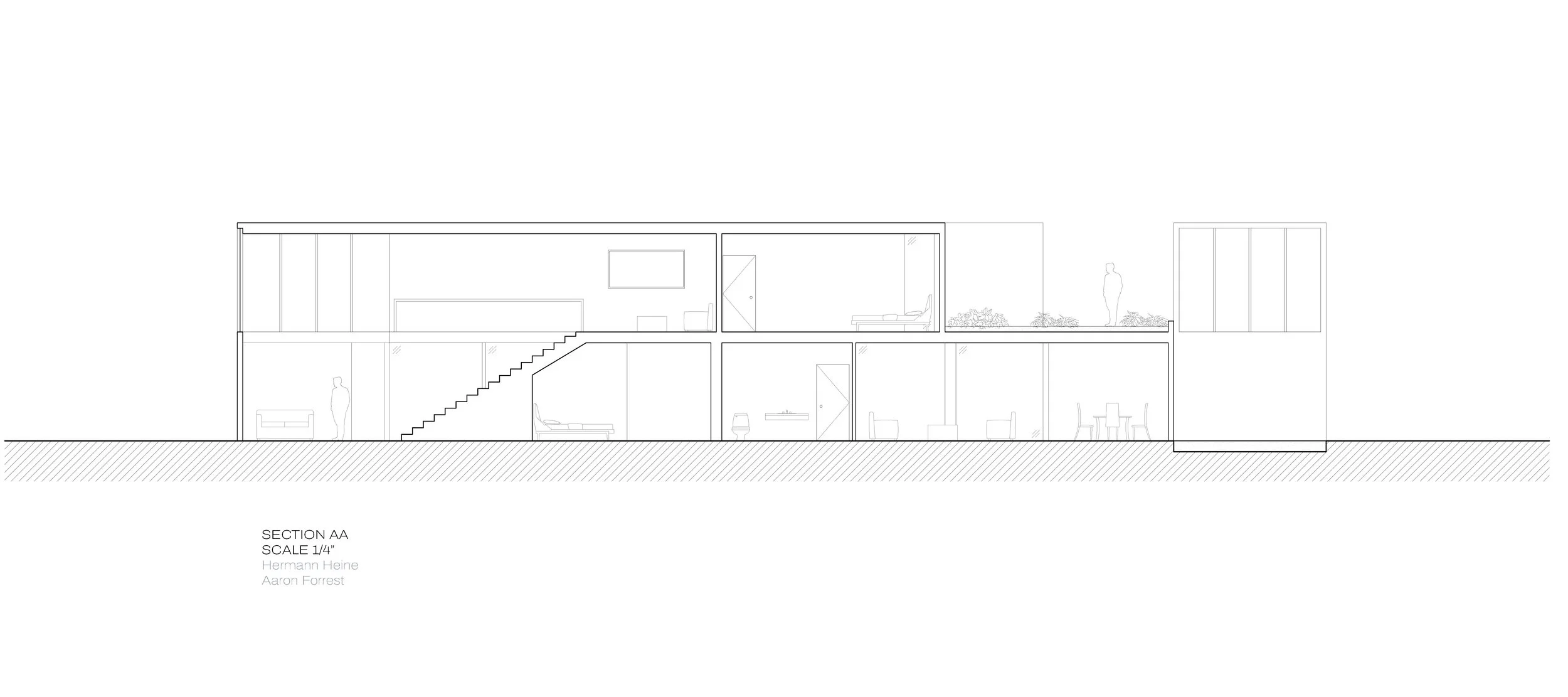
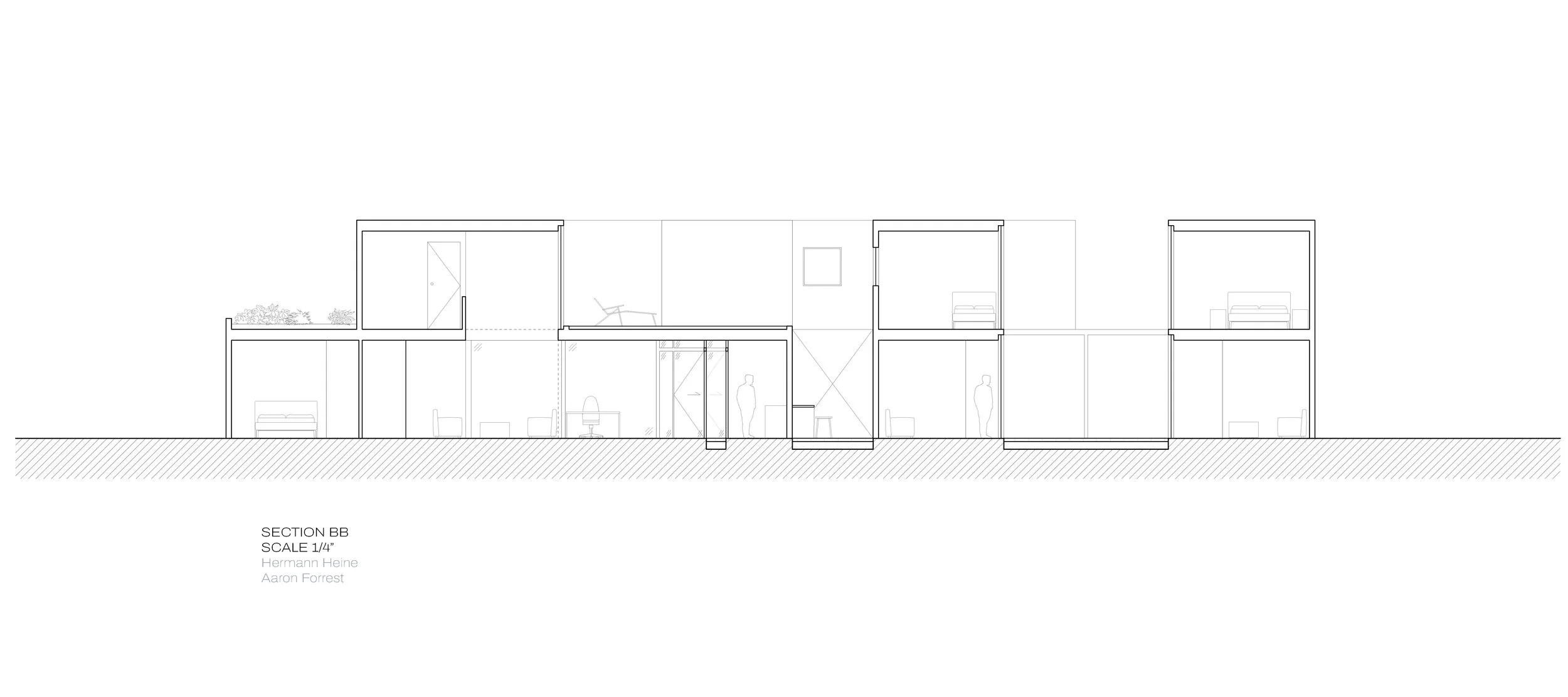
This housing establishes itself as a private dwelling without physical barriers through transitions, while offering moments of communal connection through lines of sight and spatial overlap. At the entrance, the street facade is largely solid, punctuated only by small square windows marking the bedrooms. Once this initial threshold of the solid entrance is crossed, the space opens into a large communal courtyard, where the building’s curved form becomes visible. The second threshold is the individual unit entrance, accessed by passing the main glass door to reach private residential courtyards. Without physical barriers between zones, circulation remains fluid and uninterrupted.
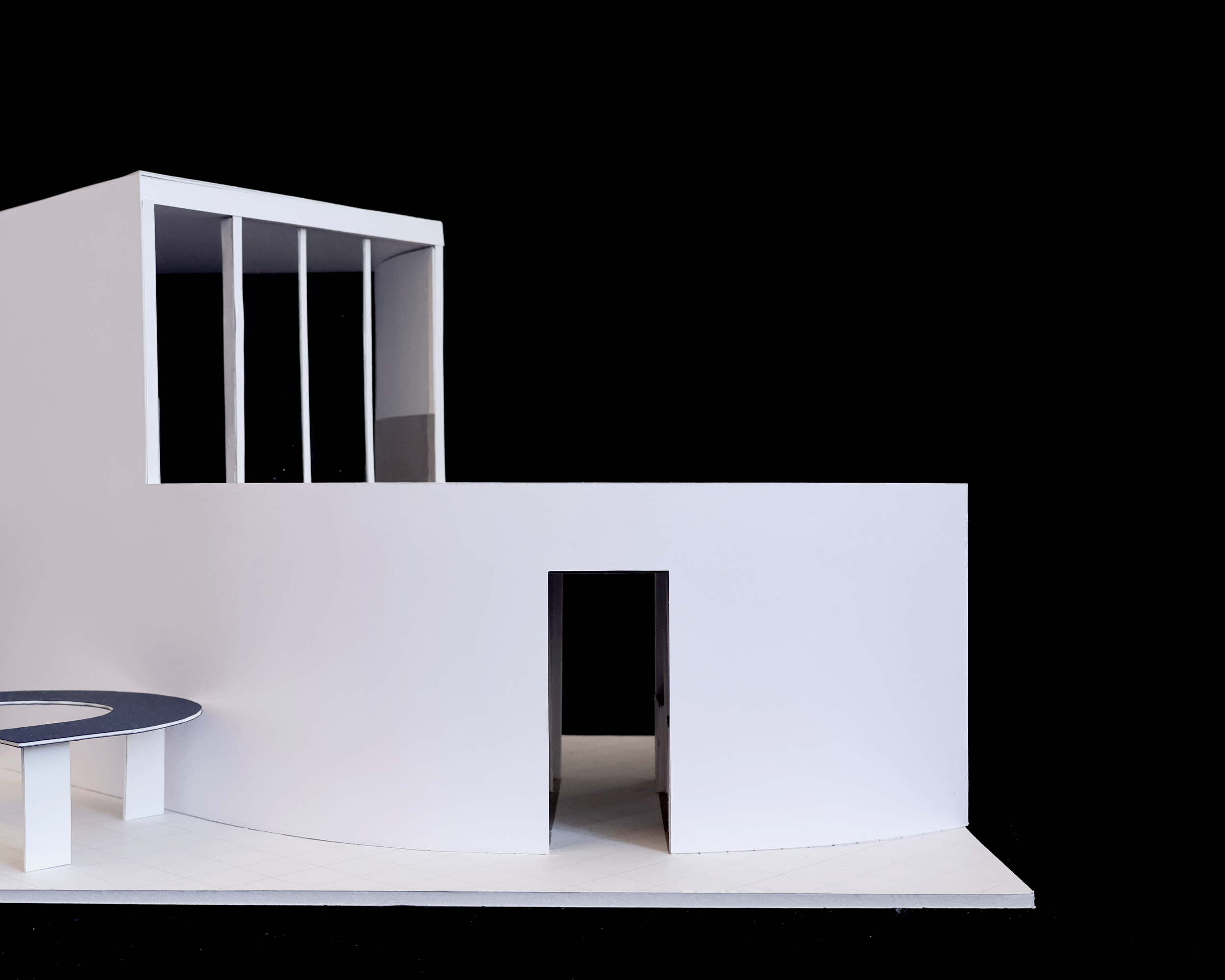
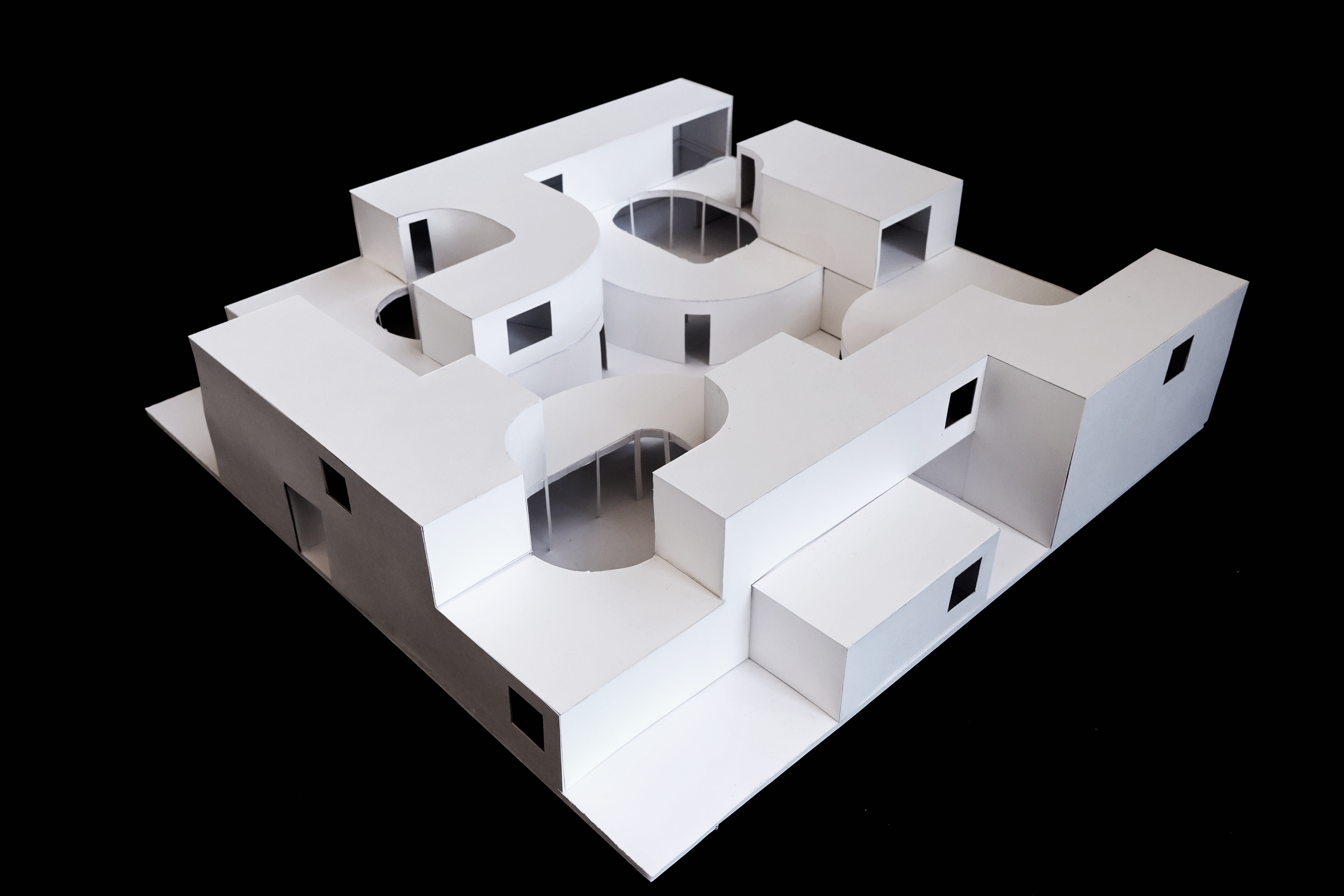
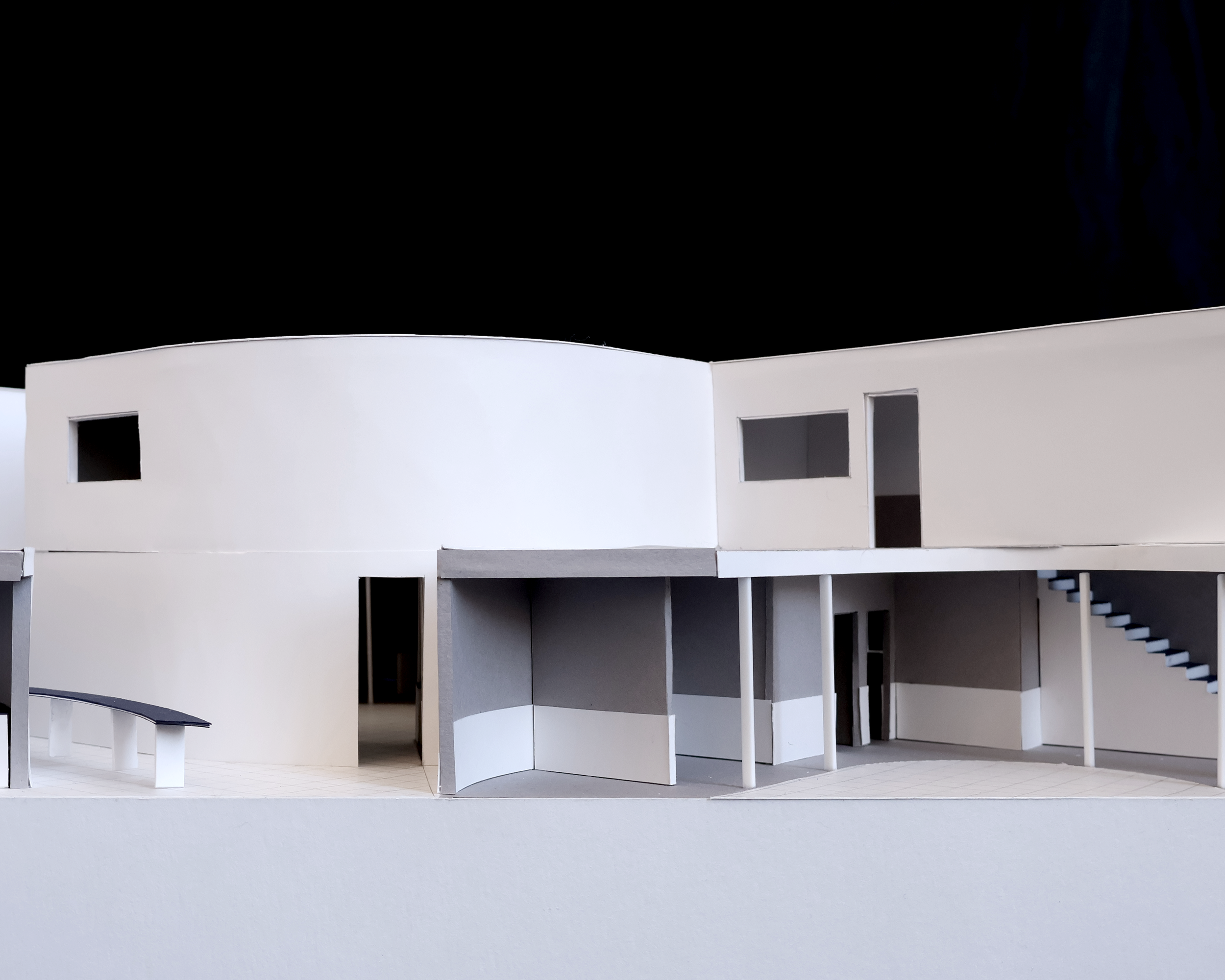
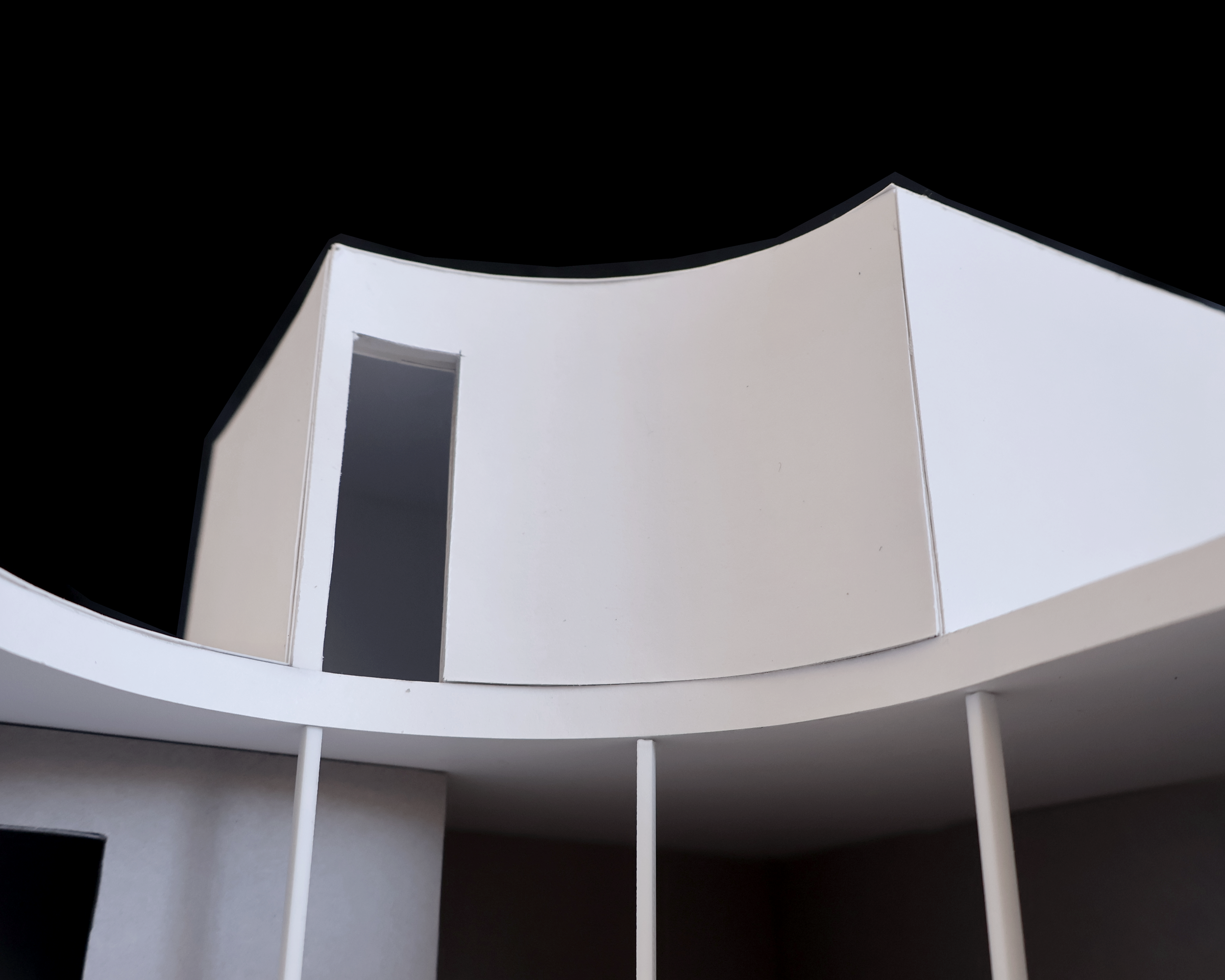
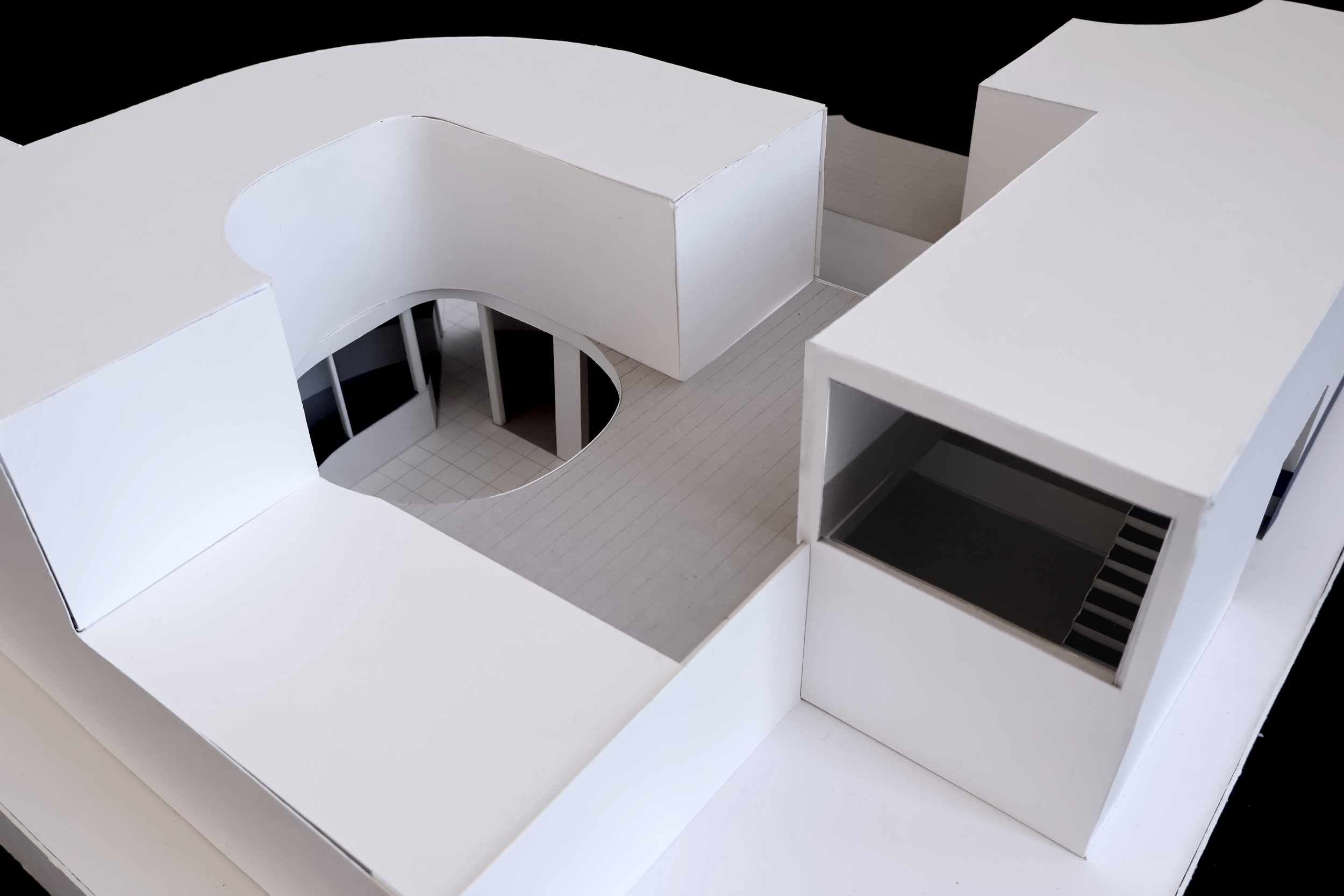
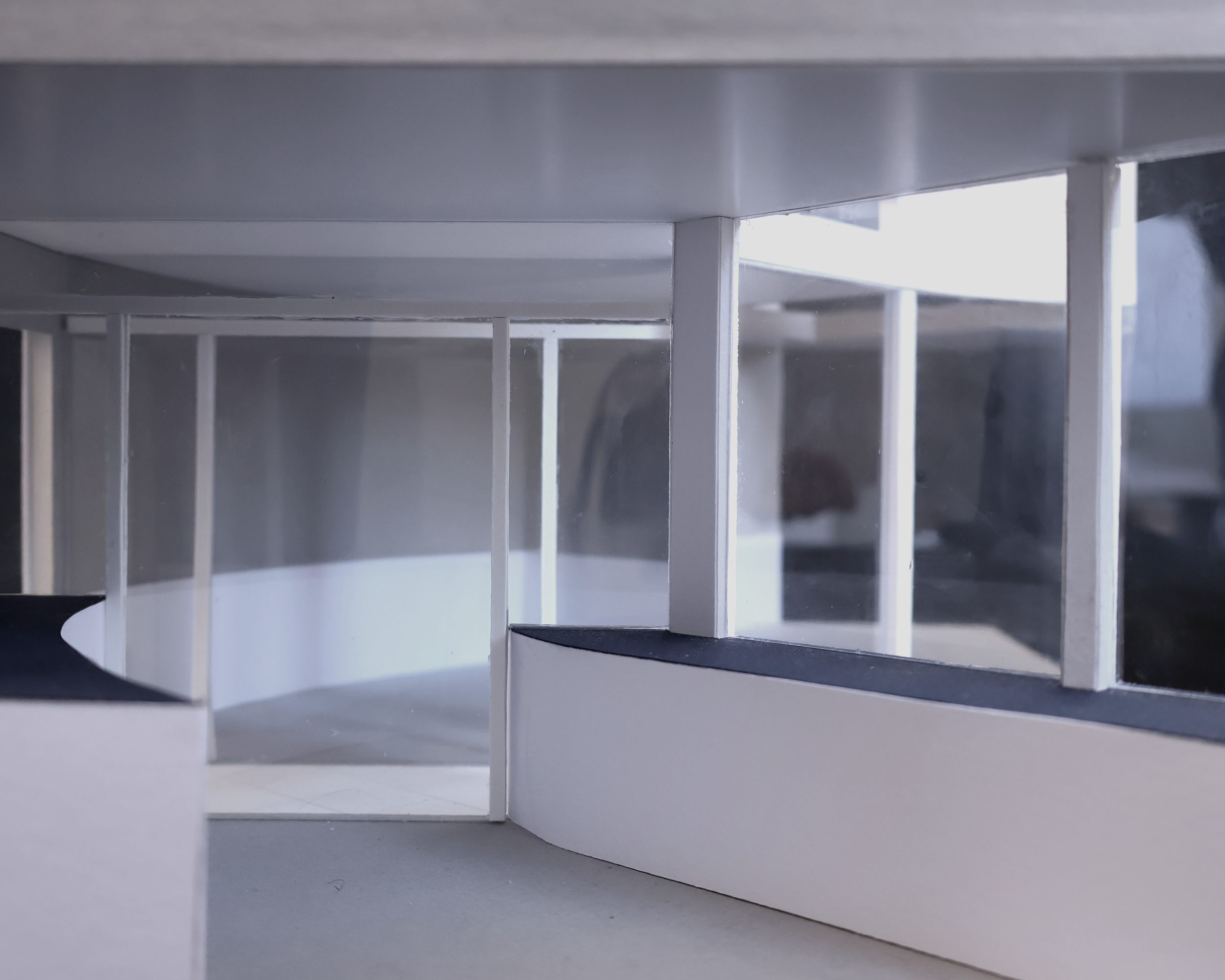

This housing design creates privacy through sequenced transitions. The solid street facade opens to a shared courtyard, then to individual units with glass-enclosed courtyards. Without physical barriers, privacy is shaped by spatial transitions, controlled transparency, and overlapping sightlines. This balances private dwelling with moments of communal connection.